


Technologies
Hurricane
ACS Numerically Optimized Cyclones
How can cyclones be improved?
Since the early 1900’s, cyclones have been mostly designed and improved by empirical means, due to the difficulty of building a good prediction method that handles with the modeling complexity related with multiphase and highly turbulent flows. Computerized Flow Dynamics (CFD) can be used for partial cyclone optimization but it is still incomplete for full cyclone optimization, due to the very large computational burden associated with highly vorticial, assimetrical and multiphase flows with polidispersity. Sub-optimization of cyclones, and notably low collection efficiency result from the fact that particle agglomeration in cyclones has been disregarded until present days.
How can cyclones be improved?
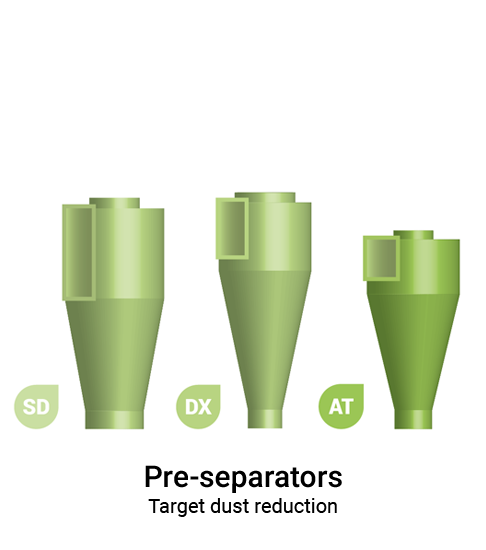
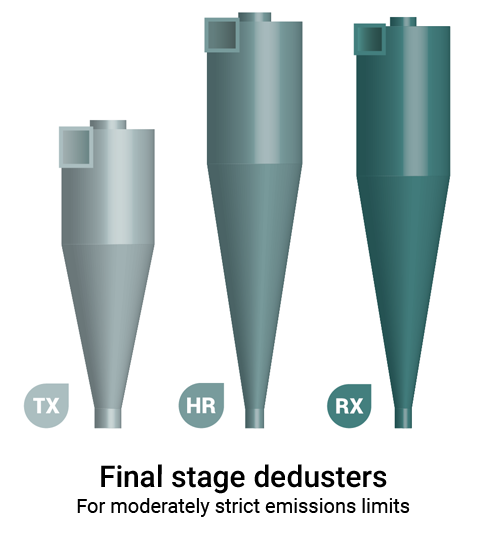
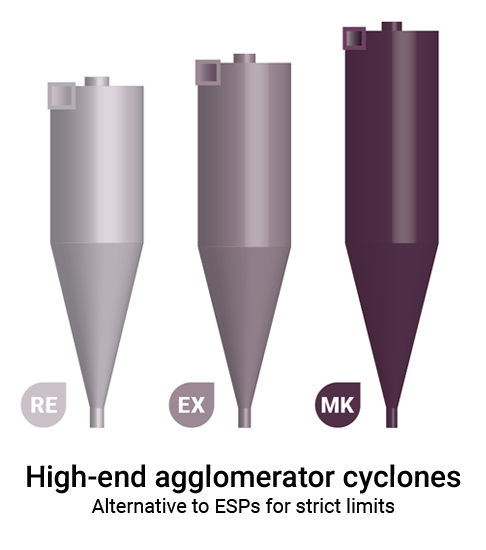
Near 350 projects implemented in the past 12 years, helped ACS develop a complete line of very different Hurricane cyclone families, with each family responding to a particular need from the client and considering how inter-particle agglomeration / clustering affects collection efficiency. From coarse particle pre-separation proportioned by compact and low pressure drop cyclones, such as the SD and DX, to fine particulate capture with high-end geometries such as the EX and MK, ACS provides solutions for a wide range of industrial cases, being able to reach emissions comparable to ESPs (down to less than 30mg/Nm3).
Particle Agglomeration and Numerical Optimization
ACS research team has been investigating this phenomenon since its foundation. Several related technical and scientific articles were published, among which the “Impact of particle agglomeration in cyclones” (Chemical Engineering Journal 162 (2010) 861–876)”. This knowledge has helped ACS build very accurate models of efficiency prediction, capable of explaining why sub-micrometer particles are often captured with much higher efficiency than expected. Indeed, particles tend to form bigger agglomerates (clusters) much easier to collect than the original particles. Agglomeration increases in the presence of wide particle size distributions, long residence times in the cyclone and high inlet particle concentrations. This knowledge has been incorporated in ACS numerical simulation tool, combining a sophisticated stochastic algorithm with a classical numerical model to predict cyclone performance: the PACyc (Particle Agglomeration in Cyclones) model.
Creating multiple cyclones for multiple needs
Thanks to the PACyc Model, and considering several economic and operation constraints (such as size and pressure loss), it is possible to simulate millions of virtual prototypes with numerical optimization within an affordable period. Considering this approach as the best path to obtain truly optimized cyclones, sound theories of cyclone collection and pressure loss were chosen for each process application. These numerical optimization problems have resulted in several families of cyclones, some of those patented. Indeed, different industrial cases have different needs for which the optimization functions to incorporate in the PACyc model may be as complex as minimizing cost or space, subject to a minimum efficiency result.
The following cyclone families, always subject to further customization, are the result of very different client demands ACS has come across until now.
How do cyclones compare?
The best way to understand the purpose of each type of cyclone and how they differentiate from each other is by designing arrangements by cyclone type for a given industrial example.
Depending on the requirements of the client, ACS may design solutions that go from process cyclones or compact pre-separators for sparks and silica reduction (protection of downstream equipment) to a final stage dust collector. The more efficient the solution is, the larger the number of cyclones needed to increase residence time and promote particle agglomeration with impact of space and cost. ACS will always search for the most cost-efficient solution.
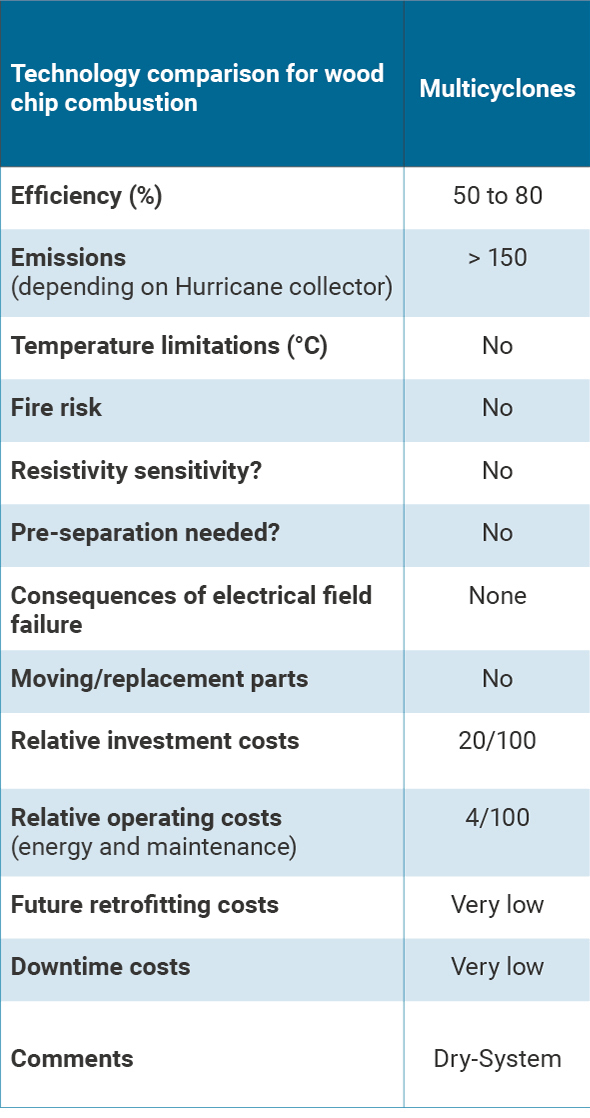
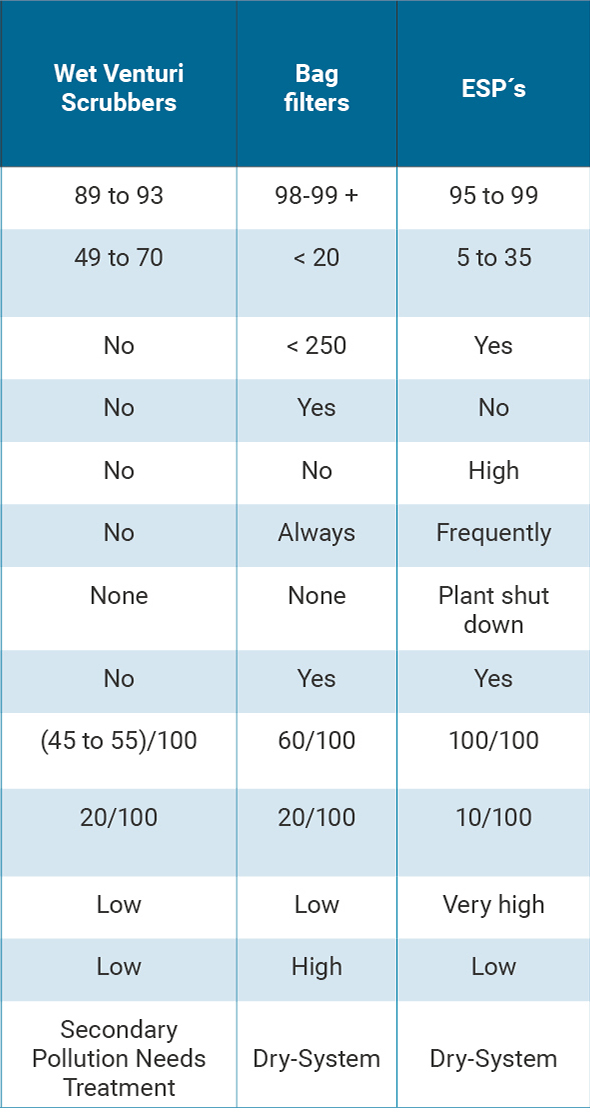
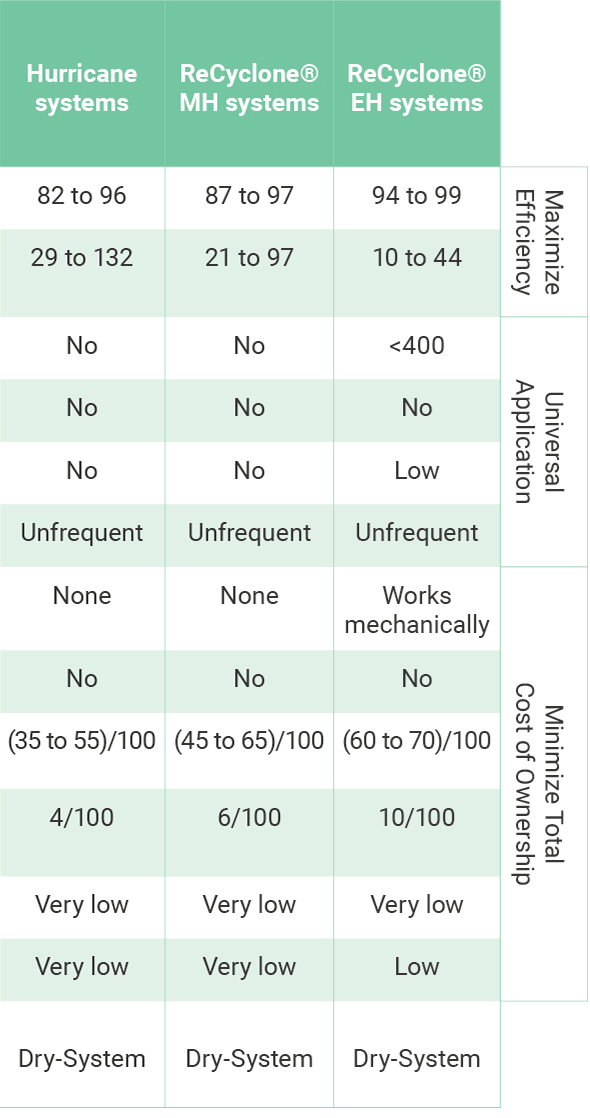
Please compare the performance of several products below for emissions control in a 5MWth wood chips moving grate boiler. Each cyclone solution has the same pressure drop and is treating air and particles coming directly from the boiler.
Your content goes here. Edit or remove this text inline or in the module Content settings. You can also style every aspect of this content in the module Design settings and even apply custom CSS to this text in the module Advanced settings.
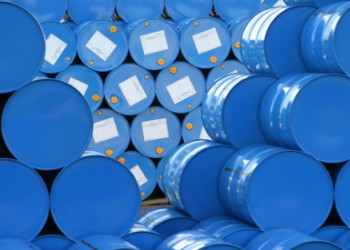
Fuel Oil Combustion
Fuel Oil Combustion (Heavy Fuel Oil, Light Oil and others) releases particulate matter (PM) to the atmosphere, polluting the surroundings and harming human health.
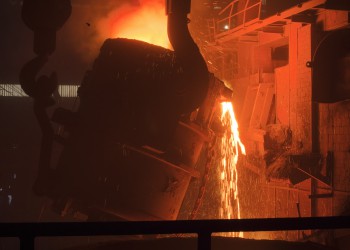
Steel and Ferroalloys
Regular cyclones and multicyclones have many operation advantages but typically fail to meet the current emission standards due to the fineness of the particles.

Pyrolysis & Gasification
Pyrolysis and gasification are both thermal decomposition processes used for energy production and material recovery.
Biomass Drying
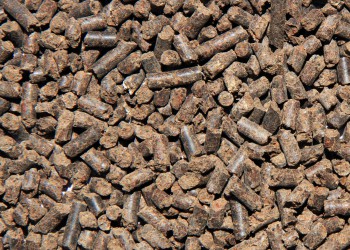
The drying of biomass is common to many industries, including wood pellet making, panel boards, and many others, from coffee to olive oil or animal feed.
Oil & Gas and High Pressure Applications
Black powder in gas pipelines is a pervasive solid contaminant in natural gas transmission and distribution systems worldwide.
High Temperature Separation Processes
Separating particles from the air at high temperature serves multiple needs from thermal energy recovery to improving the economics of power plants.
General Dedusting & Powder Recovery
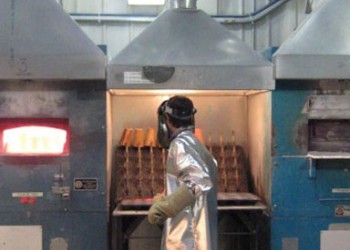
Several industries experience challenges from dust emissions during production and transportation processes, making dedusting essential across sectors...
Calcination and Mineral Processing
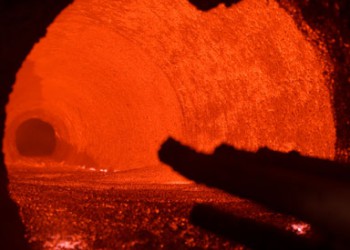
Calcination is a process that involves heating a substance at high temperature with limited supply of air or oxygen to remove volatile components.

Biomass and Coal Combustion
Pre-separation is especially important to remove the coarser dust which is richer in Silica (SiO2). This is the case of several types of biomasses, such as Forestry Residues, Palm Shell, Empty Fruit Bunch, Rice Husk, and many types of coal.

Pharmaceutical Ingredients
The efficient separation of particles is critical in the production and processing of pharmaceutical ingredients, especially during the drying, mixing, grinding ...
Chemicals
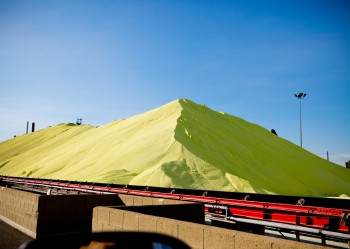
Particle separation is required for the production and processing of a wide variety of distinct products in organic and inorganic chemical powders.
Food Ingredients
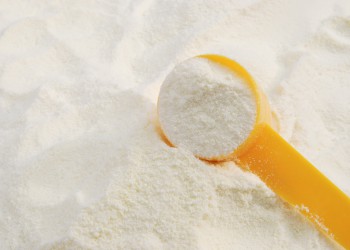
The need to separate powder-based Food Ingredients occurs in many industries, from the dairy to chocolate making and from beverages to starches and yeasts.