

Application Area
Food Ingredients
Food Ingredients
The need to separate powder-based Food Ingredients occurs in many industries, from the dairy to chocolate making and from beverages to starches and yeasts. Processes needing separation of powders include Spray Drying, Flash & Ring Drying.
Efficient recovery of Food Ingredients can be quite challenging, especially for finer particles. That is particularly evident in Spray Drying of high value milk derived proteins such as Demineralized Whey, Whey Protein Concentrate, Protein Hydrolysates or Infant Formulas.
Similar needs occur in spray dried plant-based proteins such as high concentration Protein Isolates derived from pea or soy seeds or spent grain. Flash and Ring drying also have challenges with finer fractions of starches and modified starches derived from wheat or corn/maize.
Spray Drying
Spray Drying is widely used to produce powdered food ingredients. Its versatility makes it ideal for high-value products like infant formula, plant-based proteins, and milk-derived powders. However, the efficient recovery of these powders, particularly those with fine particles, presents a major challenge.
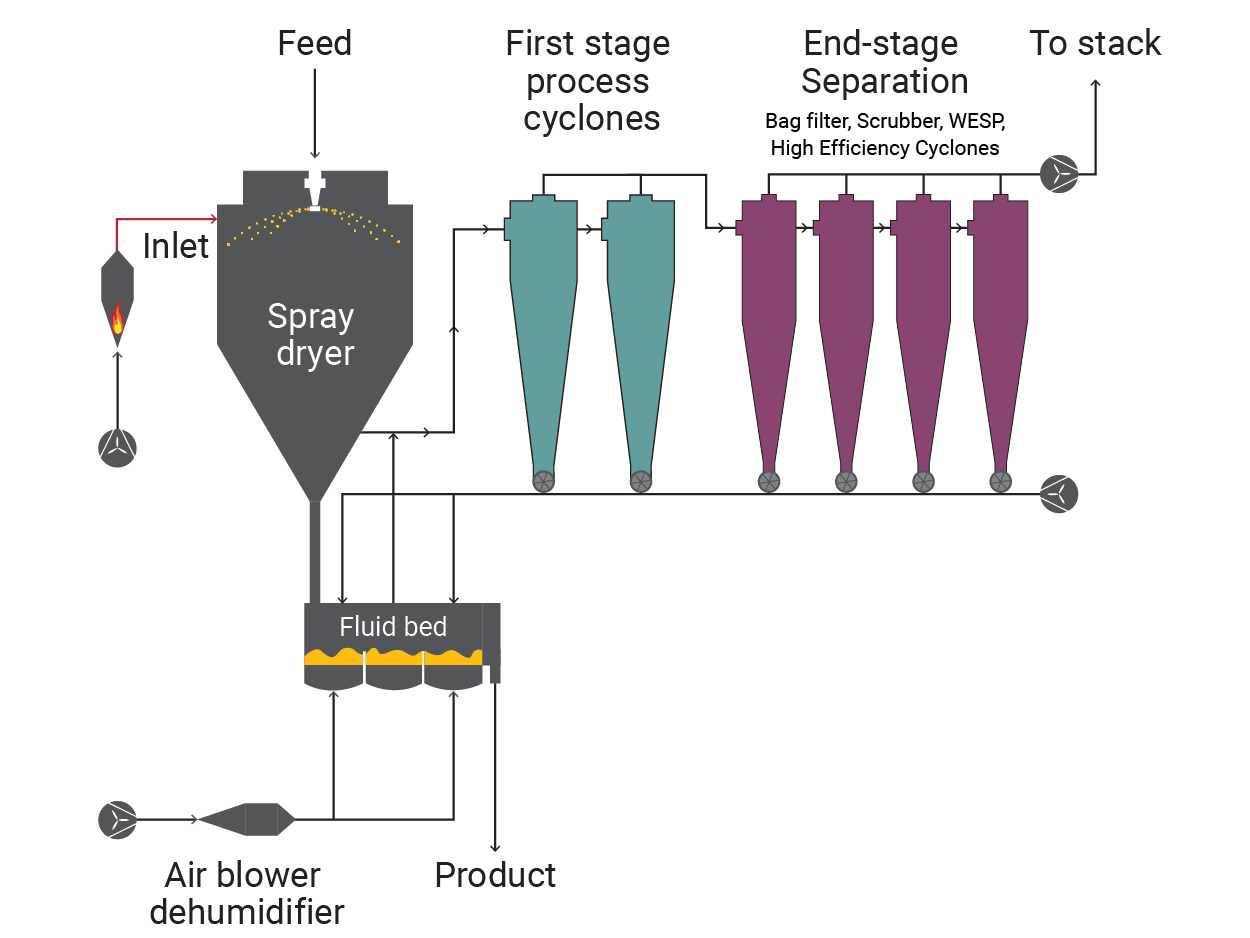
The process cyclones serve to separate and collect the dried powder from the spray drying chamber. The fraction of the product escaping to a final wet-based dedusting system is waste (e.g., WESP or Wet Scrubber) or, even at a dry basis, not considered first-grade product (e.g., Bag Filter). This is due to contamination risks from filter fibers, product cross-contamination, and heat degradation.
Efficient cyclone performance is crucial for minimizing product losses and preserving product quality. The preferred solution for both the first and second stages is cyclone collectors. In the second stage, high-efficiency cyclones are particularly effective as they provide direct and sanitary powder capture, avoiding the contamination and environmental issues associated with bag filters and wet scrubbers. These advanced cyclones ensure a higher yield and maintain the integrity of sensitive, expensive powders.
Challenges for End Stage Separation
- Fine Powders: For particles with a median diameter of less than 10µm, cyclone efficiency drops sharply, leading to losses that exceed 25%. These losses are costly and unsustainable.
- Environmental Impact: Waste from inefficient systems is neither environmentally nor socially responsible, as it creates secondary pollution or management challenges.

Regular Cyclones and Multicyclones | Problem: Low Efficiency
+ Low cost, easy to operate and clean.
+ Allow for quick stops and product rotation.
- Inefficient for fine particles (<10µm)
- Non-compliant with strict emission limits

Bag & Ceramic Filters | Problem: O&M costs
+ High efficiency (>99.9%)
+ Guarantees compliance with emission limits
- High maintenance / Risk of product contamination
- Not ideal for sensitive food applications

Wet Venturi Scrubbers and WESPs | Problem: Secondary Pollution
+ Versatile across operating conditions
- No product recovery
- Creates water pollution issues
ACS Solutions
First-Stage Process Cyclones
- ACS's TX, HR, and RX hurricane cyclones are numerically optimized, achieving 40–60% lower particle losses compared to standard cyclones. These high-efficiency systems significantly enhance product recovery, reducing waste and boosting economic returns, particularly for premium powders like infant formula and casein. By minimizing carryover to downstream equipment, ACS cyclones also reduce cleaning needs, energy use, and environmental impact.
End-Stage Cyclones
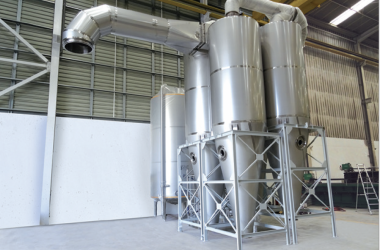
- For emissions control, RE, EX, and MK cyclones are the optimal choice, eliminating the need for bag filters or wet scrubbers. With extremely high capture efficiencies, these systems can achieve emissions below 20 mg/Nm³, depending on the powder type. Designed for food-grade operations, they are constructed in stainless steel, include CIP systems, and ensure an aseptic environment for recovered powder.
Flash Drying
Flash Drying is widely used for products such as starches, modified starches, and other similar ingredients. While the particles dried in Flash Drying processes are often less sensitive compared to those in Spray Drying, the challenge lies in capturing the maximum amount of product and maintaining emission limits
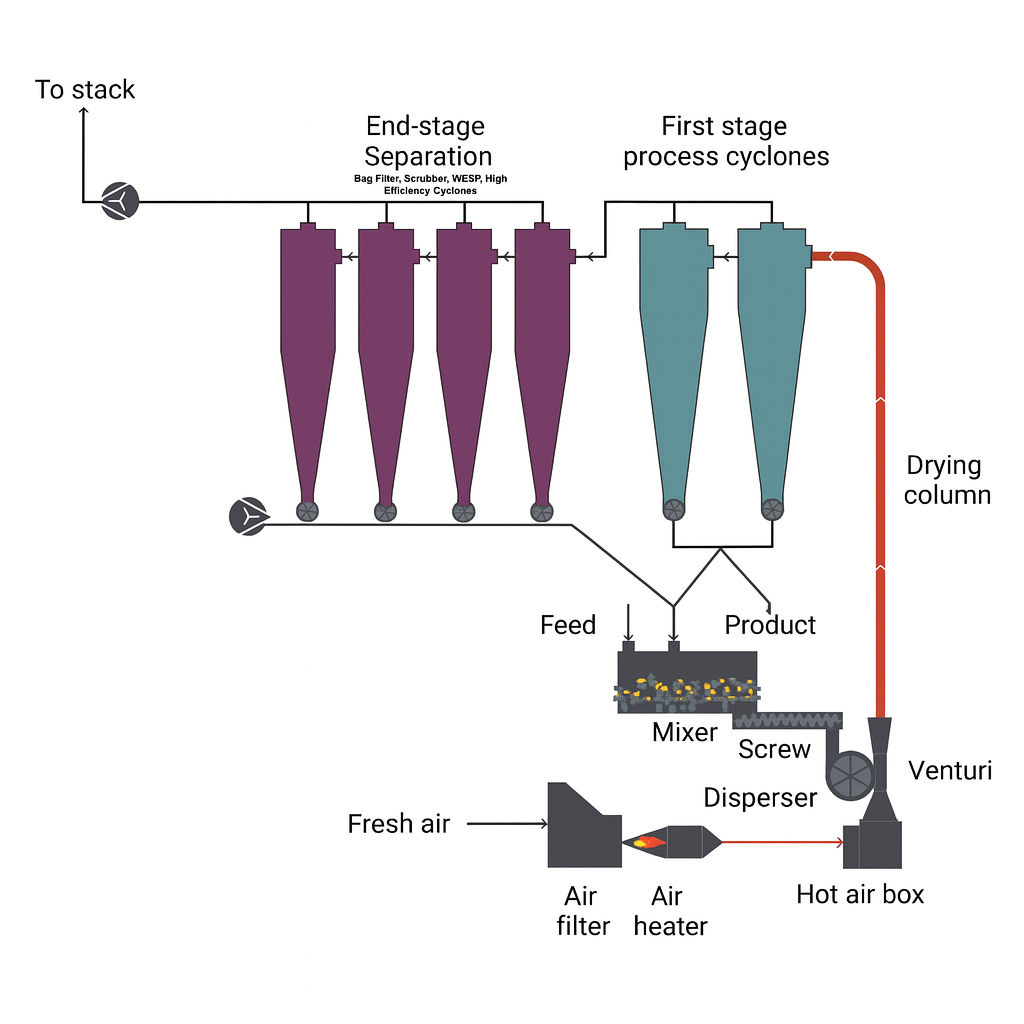
Flash Drying setups often do not include a final separator or rely on a wet scrubber for dedusting. However, it is crucial that the process cyclones efficiently capture as much of the product as possible. In many cases, achieving compliance with emission limits in a single stage is essential. When a second stage is required, high-efficiency cyclones offer key advantages, such as reducing environmental impact and lowering operational costs.
However, for products like starches and modified starches, which frequently have a median diameter in volume (MVD) of less than 5µm, conventional cyclones are not sufficient. In such cases, the solution often involves a Venturi scrubber to ensure compliance with strict regulations.
ACS Solutions for Flash Drying
ACS offers tailored cyclone solutions for Flash and Ring Drying applications:
- TX, HR, or RX Cyclones: These first-stage process cyclones are designed to recover significantly more product (40–60% reduction in losses) while complying with emission limits in many regions.
- RE, EX, or MK Cyclones: In cases where tighter emission standards are in place (e.g., 20 mg/Nm³), second-stage high-efficiency cyclones provide an ideal solution. They ensure very low emissions while offering the lowest operational costs and the most environmentally friendly solution.